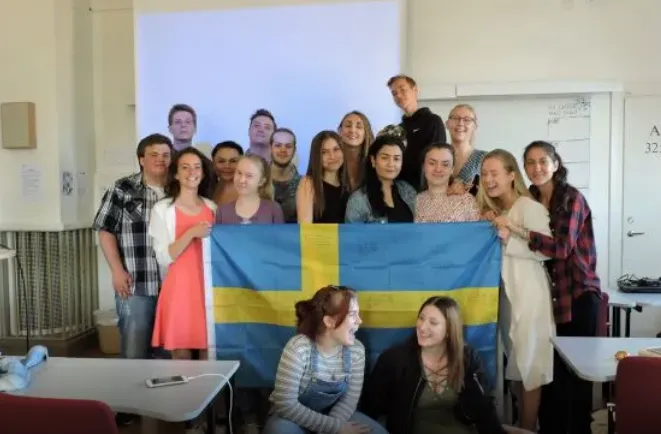
During their time at the institute, AFS students are enrolled in one of the three years of Gymnasiet, during which they attend some “core” subjects alongside other optional subjects, the details of which are discussed directly with the school. Therefore, it is possible that AFS students will be assigned to a class for certain lessons, which they can then change to attend different courses alongside their peers. School secretariats can provide foreign students with certificates of attendance including a list of the subjects studied and a general document on their progress during the school year attended in Sweden.
Swedish students have a good command of English and often use it alongside new foreign students, especially in the first weeks. Lessons are held in Swedish, however, and although teachers take into account foreign students’ initial language difficulties and assist them throughout their studies, they are encouraged to learn the national language, not least to help them integrate more quickly into the host community. This effort is also encouraged through additional Swedish courses during the first semester. AFS students are often required to give short lectures on their own country and culture.
Students are required to bring their own laptop; if they do not have one, they must notify AFS Sweden before departure.
Commitment, participation and attentiveness lie at the heart of the Swedish education system, and these qualities are expected of foreign students, who are required to attend classes regularly. Swedish schools aim to foster independence and responsibility in their students, expecting each individual to take ownership of their own learning process.
The school year runs from mid-August to mid-June, with classes from Monday to Friday, from 08:00 to 15:00 or 16:00. Lunch is provided by the school. In Sweden, it is common to walk or cycle to school. If the distance is more than 6 km, transport costs are reimbursed.
The school is also at the heart of students’ social lives. Outdoor activities and contact with nature, which are important to the Swedes, are also common. In addition to numerous sports activities and workshops in theatre, art and music, bandy, which is similar to hockey, is a popular school sport.