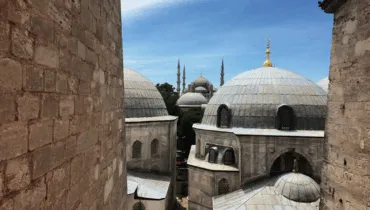
Turkey can be imagined as a bridge between the two continents, on which Istanbul was built. It was the capital of three great world empires whose marvellous ruins still stand today: the Roman Empire, the Byzantine Empire and the Ottoman Empire.

Turkey can be imagined in two ways: as the ‘foot of Asia in Europe’ or as a bridge between the two continents, on which Istanbul was built. Istanbul was the capital of these three great world empires, and their marvelous ruins still stand today.
Family

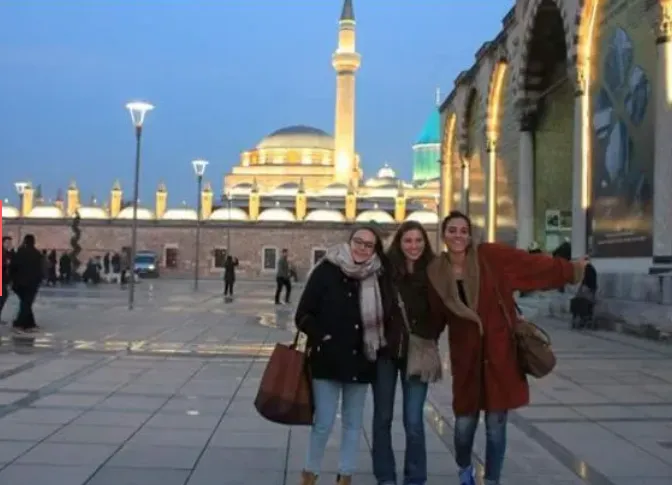
Host families with AFS are voluntarily hosting, come from all kinds of socio-economic backgrounds and can be very different from each other. Where they live can also vary; some of them live in cities, while others live in more rural or suburban areas.

The family is at the heart of Turkish society. Young people are supported financially until they marry, and family ties are strong (it is not uncommon for grandparents to live with their children and help educate their grandchildren).

For this reason, parents can sometimes become overprotective of their host children, not so much out of a lack of trust, but rather to demonstrate the warmth and affection with which they welcome the newcomer.

Young people do, however, frequently go out, and when they are not doing sports, art or music courses, they enjoy what their city has to offer. Turkey is indeed rich in cultural attractions: concerts, festivals, and theatre performances are commonplace in large cities, but also take place in smaller towns, adding to the cultural vibrancy of society as a whole. 

School

The school reflects the values on which Turkish society is based. One of the courses, “Turkish History, Revolution and the Principles of Atatürk”, recounts the exploits of the revolutionary who established the Turkish Republic.

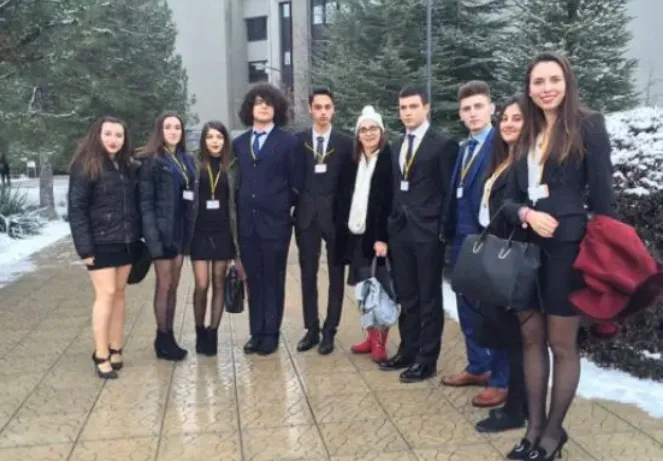
As with many other subjects, literature, geography, mathematics, science, physical education and one or more foreign languages are compulsory, while others vary depending on whether the subject is scientific or humanistic. In any case, the Turkish system provides for four years of high school, with AFS students usually being placed in the second or third year (the fourth year is very demanding as it focuses on preparing students for the university entrance exam). Schools require students to demonstrate constant commitment and active participation in classes, which are held from Monday to Friday for a total of 30–35 hours per week. According to the institutes’ rules, piercings, tattoos and coloured hair are not allowed, boys must wear their hair short, and a uniform must be worn, the cost of which is borne by the participants.

Culture

The official language of Turkey is Turkish, a member of the Turkic language family. It is written in the Latin alphabet and spoken throughout the country. Turkish has a rich vocabulary influenced by Arabic, Persian, French, and other languages due to its historical connections. In addition to Turkish, there are minority languages such as Kurdish, Arabic, and Zaza spoken by various ethnic communities. English is taught in schools and is increasingly spoken in urban areas, especially among younger people.

Skoða skiptinám í Tyrkland