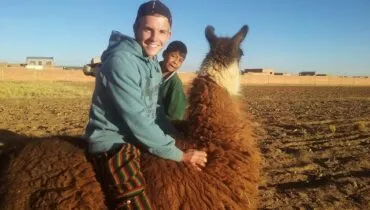
Known as the “Tibet of South America,” Bolivia is a natural bridge between the Andes and the Amazon, and the Rio de la Plata basin. 

Bolivia is home to a unique variety of climates and landscapes. There are majestic, snow-covered Andean peaks; cold, highlands dotted with beautiful lakes; vast salt flats; picturesque, fertile valleys bordered by mountains; arid plains; and immense Amazonian jungles crossed by navigable rivers. But Bolivia’s beauty and diversity do not end there: the legacy of ancient and glorious peoples and the many centuries-old cultures are still evident in the country’s languages, colours, dances and music.

Family

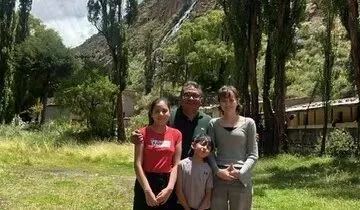
Students are hosted by local volunteer host families. The cultural diversity that characterises Bolivia’s many communities makes it impossible to accurately describe Bolivian families and their customs.

One major difference is the lifestyle of those living in large cities such as La Paz compared to those living in small towns in the Andes or in less densely populated areas. However, some elements are common to almost all Bolivians, such as the warmth and openness of the people and the importance placed on family.Most Bolivian families are Catholic, attend church regularly, and remain together for long periods of time. Grandparents, uncles, and cousins often live together and contribute to major family decisions. Parents are role models for their children, who respect the rules and boundaries set for them. The importance of family is most evident in the sharing of meals, which provide opportunities for conversation about the day’s events. Young people play an active role in family activities, particularly at weekends.

You will certainly never hear a Bolivian complain about latecomers. Here, the clock is not a concern; peace and a relaxed atmosphere always take precedence over punctuality and efficiency!

School

AFS students can be placed in both private and public schools, where classes begin at 08:00 and finish at 13:00.

The school year generally begins in the first week of February and ends in mid-November, with a fifteen-day winter vacation break between June and July. The school week almost always ends on Friday, although in a few cases school continues into Saturday. The summer months of December and January coincide with school holidays.

Most schools have mandatory subjects such as mathematics, physics, natural sciences, literature, art, religion, computer science, chemistry, social studies, philosophy and languages, as well as physical education.

Teachers expect to have a formal and respectful relationship with their students.

Some schools do not close at 1 p.m., but instead offer extracurricular activities such as choir, band, music and dance classes, and sports (particularly football and volleyball) in the afternoon.

Culture

Spanish is one of the official languages in Bolivia and is the most widely spoken language in the country, but along with 36 Indigenous languages recognized by the 2009 constitution. Spanish, Quechua, Aymara, and Guarani are among the most prominent languages, but the country’s linguistic landscape is rich with many other languages spoken by its diverse population.