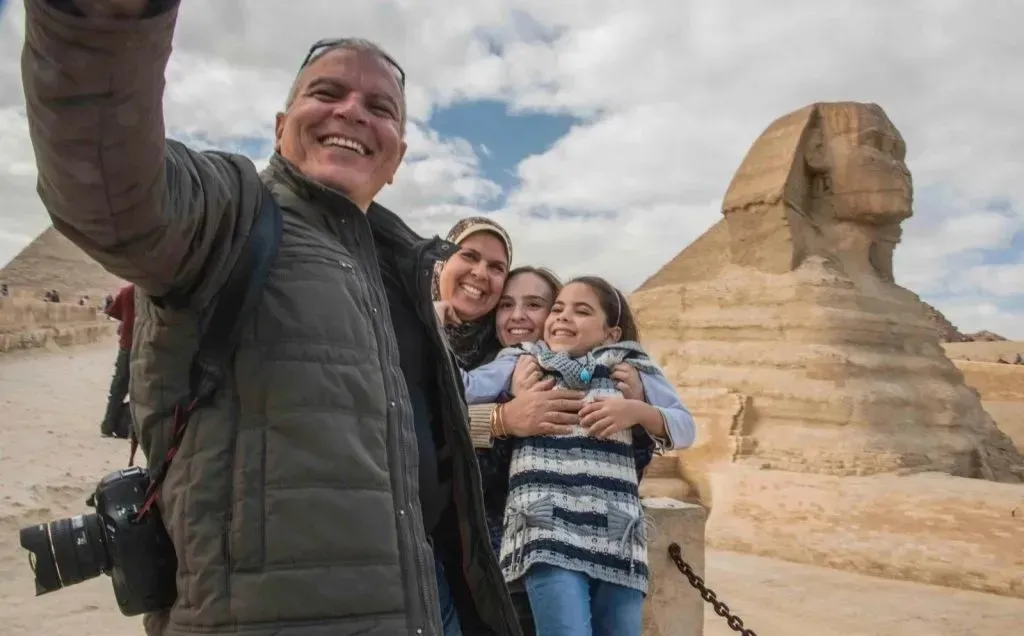
Upplifðu ævintýri í Egyptalandi, oft þekkt sem „vagga siðmenningarinnar“. Í Egyptalandi getur þú skoðað eina eftirlifandi undur veraldar – pýramídana í Giza – og gengið meðfram bökkum lengstu ár í heimi – hinni mikilfenglegu Níl – sem rennur í gegnum stormasama en gullfallega eyðimörk. Egyptaland er einstakur suðupottur nútímans og forna tíma sem blandast saman í einstakri mósaík.

Family

Host families with AFS are voluntarily hosting, come from all kinds of socio-economic backgrounds and can be very different from each other. Where they live can also vary; some of them live in cities, while others live in more rural or suburban areas.

Family life plays a key role in Egyptian society. It is considered the core of society and includes not only parents and siblings, but also grandparents, uncles and cousins. Within the household, the father is often the breadwinner, while the mother is seen as the heart of family life, responsible for raising and educating the children. Children’s behaviour is seen as a reflection of their mother’s education.

Children show great respect to their parents, and responding to or disobeying family rules is generally considered irreverent.

Typically, Egyptian families spend a lot of time together, both at home and outside. A central part of this is the main meal of the day, lunch, which is usually eaten in the afternoon once everyone has returned from work or school. Food is shared among all family members and eating alone is generally considered rude.

When they are not with their families, Egyptian teenagers like to go out shopping, or go to the cinema. Boy/girl relationships are viewed much more restrictively than in Western culture.

School

Depending on where the host family lives, AFS students may be placed in private or international schools. 

While most of the students are Egyptian, the school system is inspired by those in Western countries and classes are predominantly taught in English. 

Some students are placed in experimental schools where the traditional Egyptian school system is adopted, with just some subjects taught in English. In these schools, all classmates are local students.

Culture

Egypt is a multilingual country where Modern Standard Arabic is the official language used in education, media, and formal settings. However, Egyptian Arabic (Masri) is the most widely spoken dialect in daily life, alongside other regional varieties like Sa‘idi Arabic in Upper Egypt. Minority languages such as Nubian, Siwi Berber, Beja, and Coptic are spoken by smaller communities, though many are endangered. English is widely taught and used in business and tourism, while French and other European languages have a limited presence in education and cultural circles. The country experiences strong diglossia, with people shifting between formal and colloquial Arabic depending on context.

Skoða skiptinám í Egyptaland