
Known as the ‘Gold Coast’ since the time of European colonisation, the country is descended from the ancient Ghanaian Empire, which controlled much of the salt, gold and ivory trade along the West African coast. Today, the country’s major cultural expressions are dance and music. One notable example is the Bayama dance, which is performed especially in the north of the country during harvest time to ward off drought.
Family
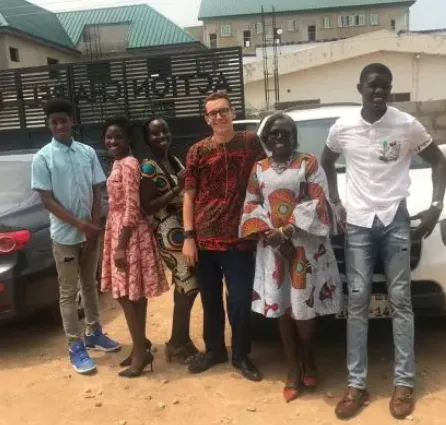
Host families with AFS are voluntarily hosting, come from all kinds of socio-economic backgrounds and can be very different from each other. Where they live can also vary; some of them live in cities, while others live in more rural or suburban areas.
Find out more
Ghanaian families are often very large and renowned for their hospitality, which is reflected in the food they prepare, a fundamental part of the country’s culture. The sense of community is strong, and it is common for families to gather in the courtyard to eat together, sharing the values of hospitality and community. It is also common to share a room with other family members.
Ghanaian children usually spend much of their free time with their families, watching TV, playing board games such as oware and draughts, or attending religious services and ceremonies. The population is very religious, whether Christian or Muslim, but attendance at services is not compulsory for AFS students.
The presence of 52 ethnic groups in the territory means that students can attend dozens of different traditional ceremonies, all characterised by the bright colours of the traditional clothing, especially that worn by women.
Ghanaian parents are generally very protective of their children, who are expected to abide by family rules. These include helping with household tasks such as tidying up the room or washing clothes. Since washing machines are not always present in homes, laundry has to be done by hand using a traditional local method.
Teenagers like to get together after school to play football, basketball or field hockey. They also often meet to dance and play traditional instruments.
School
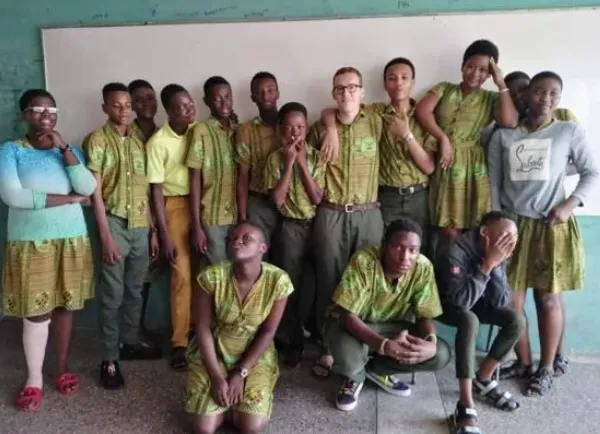
Depending on where the host family lives, AFS students may be placed in private or international schools.
Find out more
Ghanaian high schools offer a range of subjects: Arts and Literature; General Science; Agricultural Science; Home Economics; Visual Arts; and Economics. In addition to the subjects that characterise the different majors, there are four compulsory subjects for all students: English, mathematics, science and social science.
All high schools, both private and public, require students to wear a uniform, which is usually provided by the school. For boys, this is a short-sleeved shirt and shorts, and for girls, it is a dress or a skirt and a blouse. Students are sometimes also required to purchase a ceremonial outfit for special occasions.
Piercings and earrings of any kind, as well as ‘dreadlock’ hairstyles, are prohibited at school. Boys must also keep their hair and beards short and well-groomed.
Classes are held from 8:00 a.m. to 3:00 p.m. and are taught in English. Since the school does not provide lunch, students prepare it at home and eat together during the break between classes at noon.
In the afternoons, the school may organise extracurricular activities and students can choose to attend one of several clubs, which usually meet once a week.
Culture
Language
Ghana is a linguistically diverse country with over 80 languages spoken across its regions. The official language is English, used in government, education, and media. However, several indigenous languages hold significant cultural importance, including Akan (Twi and Fante), Ewe, Ga, and Dagbani. These local languages are widely spoken in daily life and are often used alongside English in schools and homes. The richness of Ghana’s linguistic heritage reflects its ethnic diversity and deep-rooted traditions.
Food
Weather
Religion
Skoða skiptinám í Ghana
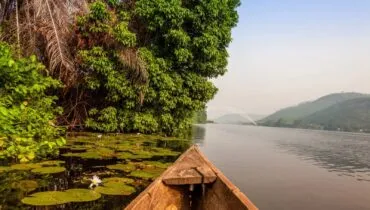
Skiptinám í Ghana
- LandGhana
- Lengd10 mánuðir eða lengri