Located in the heart of Latin America, Paraguay is surrounded by Brazil, Argentina, Uruguay and Bolivia and has no access to the sea.

Like other South American countries, its history has been shaped by European and Asian migration. The population is predominantly of mixed Spanish and Guarani descent, with both Spanish and Guarani being official languages. Guarani is also widely spoken and reflects the country’s indigenous heritage.Paraguay is divided by the Paraguay River into two distinct regions: the eastern region (Paraneña) and the western region (Chaco). 

The eastern region features plains, hills, and forests, while the Chaco is characterized by low, marshy plains, dry forests, and scrubland. 
Family

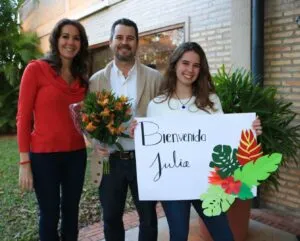
Students will be staying with a local family; host families with AFS are voluntarily hosting, come from all kinds of socio-economic backgrounds and can be very different from each other.

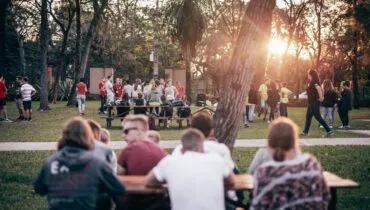
Paraguayans are a very expressive and sociable people. Young people and adults enjoy eating together, celebrating and dancing, and many go out in the evening or host parties at home where they dance until late. Time is viewed very „relaxedly“ here, and delays to appointments are commonplace. This is normal, as is it common for grandparents, parents, children and college students to live together in the same household, all fully integrated into family life. Young people never stop being part of the family, even after achieving economic independence and perhaps moving to a new home. Until then, they respect family rules, which are rather protective, especially with girls. It is considered polite to ask permission to go out with friends or to invite them home, particularly if they are staying over (which is not a common custom). The family is the most important element of Paraguayan society and culture, which are closely tied to traditions of the past. Therefore, if a friend or volunteer invites a student to their home, it is a sincere gesture that should be appreciated, not just a form of courtesy.

School

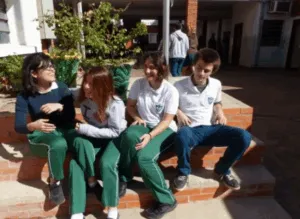
A large part of the day is taken up with school, which plays a key role in Paraguay, so it is important for foreign students to actively participate in classes and extracurricular activities. These activities provide opportunities to make new friends and integrate into the new environment more quickly. 

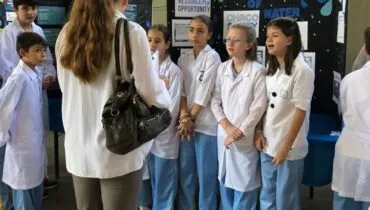
The school year in Paraguay begins in midsummer, with courses starting in mid-February and ending in late November, and a two-week winter break in July. The relationship with Paraguayan professors is quite formal. AFS participants are required to follow the same programmes as their classmates, attend the subjects in the curriculum and wear the uniform if this is part of the institution’s regulations (the cost of which is not included in the participation fee).

Culture

Paraguay is a bilingual country where both Spanish and Guaraní are official languages. Spanish is widely used in government, business, and formal education, while Guaraní, an indigenous language, is spoken by the majority of the population in daily life. Uniquely, Paraguay is one of the few countries in the Americas where an indigenous language is spoken by both indigenous and non-indigenous people. This bilingualism is a key part of Paraguayan identity and culture, with many people comfortably switching between the two languages, often blending them in conversation.

Skoða skiptinám í Paragvæ